Introduction
The ‘14th Five-Year Plan’ outlines a vision to enhance digital intelligence development and promote deep integration between the real economy and the digital economy. What new opportunities will this ‘digital intelligence’ bring?
Smart Factory Upgrades
In a leading smart factory in Xuzhou, Jiangsu, a significant ‘digital intelligence’ upgrade is underway. With over 50 cranes of 9 models receiving international orders simultaneously, the production system is activated immediately.
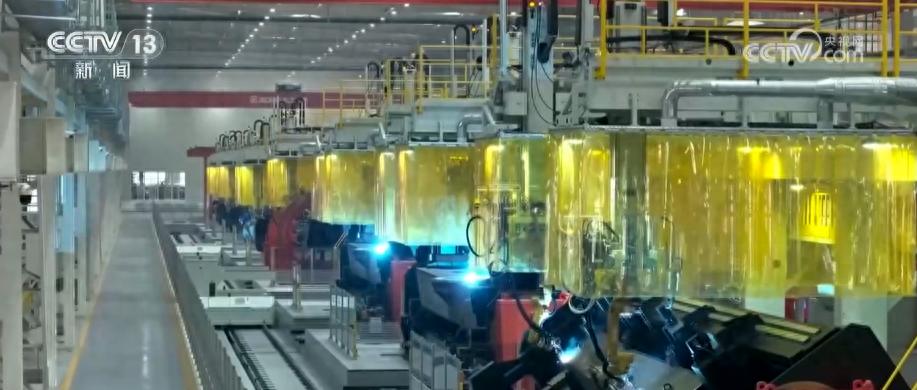
Inside the factory, smart devices spring into action, having already planned out the entire production process for the next 30 days. Each production line is transforming based on new configurations, and in just 10 minutes, all lines are completely renewed.
Engineer Zhuo Feng explains that previously, changing models required 2 to 3 people and took five to six hours. The shift from digital to digital intelligence means that equipment can now think, resulting in a 30% increase in overall production efficiency, with customized engineering machinery.
AI in Production
What enables production equipment to think? In this factory, AI technology is applied across 25 out of 38 scenarios in five major areas, involving 35 intelligent models. Researchers are using digital twins for remote monitoring of production progress.
Additionally, a new crane welding model is under rapid development, integrating cutting-edge digital technologies like digital twins, 3D vision, and AI reverse modeling. This intelligent model is set to revolutionize the current production mode when it is officially launched in 2027.
New Opportunities from Intelligent Factories
On this smart production line, 26 intelligent devices are working in coordination. Welding equipment features three robotic arms collaborating, with over ten data collection terminals analyzing data. The end laser sensors can measure distance and avoid obstacles. With foundational computing power support and AI chips, by 2030, such a production line is expected to drive investments exceeding 100 million yuan, while the overall digital intelligence transformation of the factory will exceed 1 billion yuan.
Trillions in New Opportunities
Even a single factory’s digital intelligence upgrade will lead to investments exceeding 1 billion yuan. The ‘14th Five-Year Plan’ aims to comprehensively promote digital intelligence technology empowerment. This full-scale transformation will bring significant industrial changes and vast opportunities.
Currently, there are 15 leading smart factories being cultivated in China, covering steel, refining, automotive, and electronic information sectors, collectively driving the collaborative upgrade of over 1,300 upstream and downstream factories. During the ‘14th Five-Year Plan’, China will build several more leading smart factories.
Ao Li, vice president of the China Academy of Information and Communications Technology, noted that during the ‘13th Five-Year Plan’, China achieved significant breakthroughs in smart factory construction. The focus of the ‘14th Five-Year Plan’ is to expand coverage and improve quality, laying the foundation for broader smart manufacturing across various industrial categories. This period will be crucial for the accelerated popularization of digital intelligence in manufacturing.
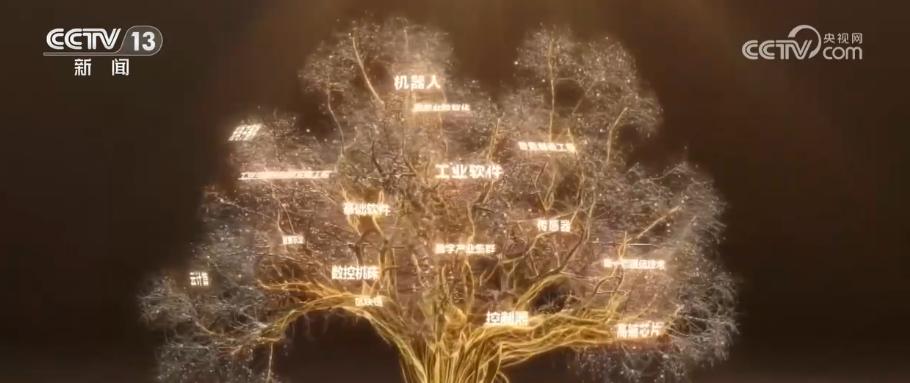
Driven by ‘digital intelligence’, the next five years will see a denser integrated computing network nationwide, with data infrastructure expected to attract approximately 400 billion yuan in direct investment annually. The demand for intelligent equipment such as industrial software, sensors, controllers, robots, and CNC machine tools will continue to grow, with the cloud computing market alone expected to exceed 3 trillion yuan. By the end of the ‘14th Five-Year Plan’, the scale of AI-related industries is projected to surpass 10 trillion yuan.
The transition from ‘digital’ to ‘digital intelligence’ will lead to profound changes and revolutionary leaps in production methods and productivity.
AI-Driven New Job Opportunities
As digital intelligence upgrades accelerate, a wave of new job demands will emerge, prompting traditional industries to transform and upgrade their talent pools while accelerating the innovation of new specialties and skills.
At the Xuzhou Engineering Machinery Technician College, a new smart equipment program is attracting more young people. Yang Yuchi, a student in the G1 class of the smart equipment program, expressed admiration for the giant steel creature called the “Steel Mantis” from the film “The Wandering Earth”. With rapid advancements in AI, students are eager to learn new skills and specialties for better career choices.
Zhang Lina, the college’s dean, mentioned that six new specialties have been established around the six major scenarios of the leading factory, including intelligent manufacturing, smart operations, industrial robotics, and the Internet of Things. If their curriculum lags, they will surely fall behind the pace of industry development.
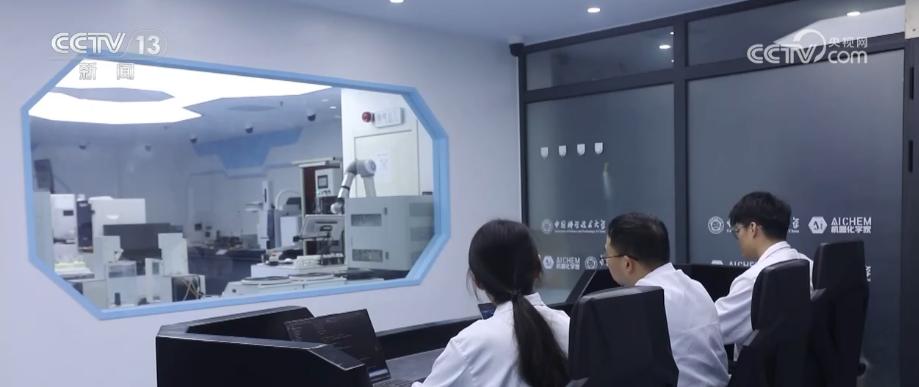
Vocational schools are keeping pace with the forefront of digital intelligence development, and more higher education institutions are actively laying out their digital intelligence tracks. Currently, over 620 undergraduate institutions offer AI programs, and more than 360 offer intelligent manufacturing engineering programs. Zhejiang University has introduced a series of compulsory courses on AI fundamentals for all undergraduates and has developed related courses such as intelligent communication, smart agriculture, and brain-computer integration, along with specialized training projects in smart oceans, intelligent manufacturing, and smart optoelectronic chips and systems.
Zhang Xinxin, a student in the 2023 intelligent manufacturing excellence training program at Zhejiang University, noted that the changes in the mechanical industry far exceed her expectations. Her major focuses on sensory integration, and she hopes robots can assist people with daily tasks. Their training program is closely aligned with industry development, yielding significant results for future technology implementation.
Wu Fei, dean of the undergraduate college at Zhejiang University, introduced the “AI+X Micro Major 2.0” initiative, with over 600 students from five universities in East China choosing this path, creating interdisciplinary bridges that break down barriers between majors and disciplines.
As digital intelligence develops rapidly, new job opportunities are forming at an accelerated pace. Data shows that there is a talent gap of about 4 million for AI-related positions such as large model algorithm engineers, robot behavior trainers, and AI engineers, with demand in the intelligent manufacturing sector exceeding 10 million.
Comments
Discussion is powered by Giscus (GitHub Discussions). Add
repo,repoID,category, andcategoryIDunder[params.comments.giscus]inhugo.tomlusing the values from the Giscus setup tool.