Introduction
The rapid development of artificial intelligence (AI) and its widespread applications have led many to believe that “this time it’s different.” This recognition is crucial as it prompts a deep reflection on past assumptions regarding technology’s impact on employment, necessitating revisions in our analytical frameworks and policy approaches. The ongoing research in this area has been significantly contributed to by two prominent figures: 2024 Nobel laureate and MIT economics professor Daron Acemoglu, and Pascal Restrepo, who studied at MIT and now teaches at Boston University. Together, they have addressed nearly all critical questions concerning the impact of AI on employment.
Key Findings
Fact 1: Aging Population Accelerates Automation
A significant aspect of demographic change is the shift in age structure and aging, resulting in labor shortages and rising average wages. The mechanism of induced technological change continues to play a role, transforming the AI revolution and related innovations into automation that replaces human labor. Research by Acemoglu and others has analyzed various data across countries and industries, revealing that aging, particularly the shortage of middle-aged workers, drives innovation in robotics and other automation technologies. Countries experiencing rapid aging show more pronounced automation innovations, especially in industries reliant on middle-aged labor.
Globally, demographic changes are evident, although countries are at different stages. Countries with long-standing low birth rates face accelerated aging and a swift decline in the working-age population, leading to significant labor shortages. The relative scarcity of labor and the resulting increase in labor costs make it economically rational for firms to replace human labor with capital and technology-intensive machines.
For instance, China, Japan, and South Korea—leaders in the global industrial robot market—are also notable for their demographic transitions. China exhibits the characteristic of aging before becoming affluent; Japan has long maintained low birth rates and is among the countries with the highest aging rates; South Korea has recorded the lowest total fertility rate in the world.
According to World Bank data, the total fertility rates in 2022 for China, Japan, and South Korea were 1.18, 1.26, and 0.78, respectively, with aging rates in 2023 at 14.3%, 29.6%, and 18.3%. The proportion of the core working-age population (ages 20-40) has rapidly declined in these countries from 2000 to 2023, by 7.3, 7.5, and 10.2 percentage points, respectively.
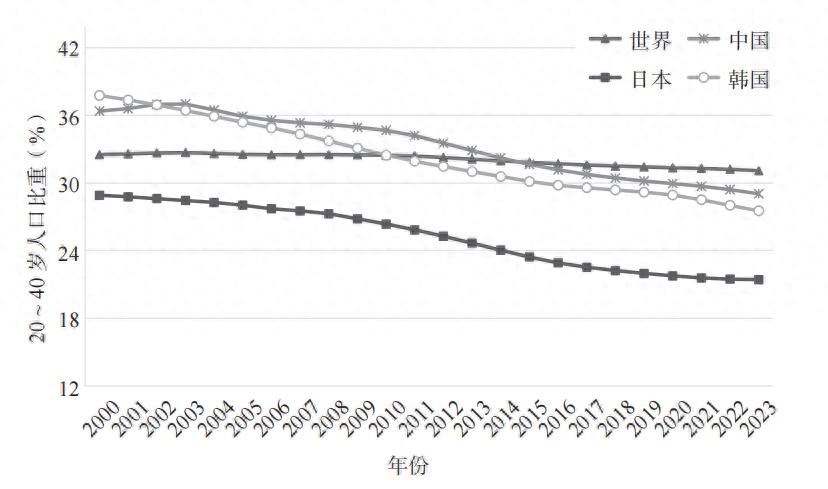
Figure 1: International Comparison of Labor Shortages
Fact 2: Automation Increases Income Inequality
When machines replace human labor as a more economically viable input-output choice for employers, it tilts the balance of the labor market, placing workers at a disadvantage in bargaining power, leading to a decline in labor compensation relative to capital returns. Additionally, workers with different human capital endowments face varying market demands and returns, widening the income gap.
Acemoglu and colleagues note that automation and robotics tend to reduce the labor share of national income, suppress wage growth, and limit job expansion. In China, this phenomenon has significant policy implications, as the country has experienced notable fluctuations in income disparity during periods of rapid economic growth. The income ratio between urban and rural residents and the Gini coefficient rose from 2.24 and 0.31 in 1981 to peaks of 3.11 and 0.49 in 2009, before declining to 2.45 and 0.47 in 2022.
Using the Palma index, which reflects income disparity by comparing the top 10% to the bottom 40% of earners, we can observe the trajectory of income distribution in China, resembling the theoretical Kuznets curve.
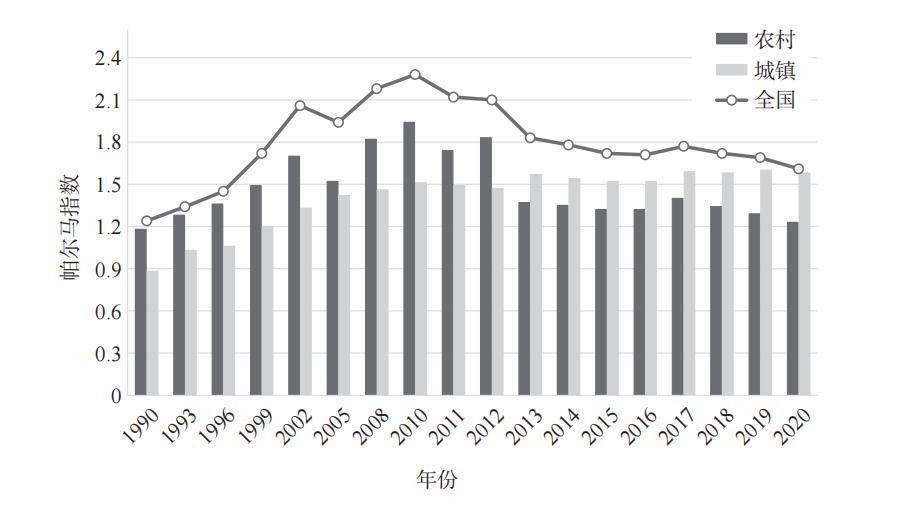
Figure 2: Changes in the Palma Index of Income Distribution
This trend indicates that the overall improvement in income distribution has primarily resulted from a significant reduction in the urban-rural income gap, while the income disparity within urban areas has widened. The pace and magnitude of improvement in overall income distribution have slowed. The Gini coefficient reached a low of 0.462 in 2015 and has fluctuated between 0.465 and 0.468 from 2016 to 2022.
Despite these changes, the level of income inequality remains high by international standards. The evolving composition of income disparity suggests that existing gaps are increasingly linked to the consequences of new technology adoption, highlighting the urgent need for a significant policy shift in China to effectively reduce income inequality.
Fact 3: Guiding AI Development Towards Productive Job Creation
Acemoglu and others have found that the application of new technologies like AI can follow opposing patterns. If enterprises and society are directed towards automation as the primary goal—favoring labor replacement and reducing labor shares—rather than focusing on job creation to narrow income disparities, it indicates market failure. The “correct” outcomes of technological change do not occur naturally but can be achieved through institutional arrangements.
From an economic perspective, the ongoing debate about how technological inventions and applications can benefit workers relates to the general conclusions about market failure and the necessity for government intervention. Various researchers from multiple disciplines engage in this discussion, albeit using different terminologies and arriving at alternative conclusions. For instance, scholars in the AI field are often aware of the potential dangers of AI technology and raise concerns about the “alignment problem” with human ethics. However, some argue that this very alignment issue could lead to a logical conundrum: aligning with whose ethics?
Before revisiting alignment-related issues in later chapters, we must explore whether it is possible to avoid unnecessary employment shocks caused by AI within the framework of market failure.
For most economists, the incompatibility of incentives between micro and macro levels is a classic representation of market failure. On one hand, firms typically respond rationally to labor shortages and rising wages through various means, including technology choices and product structure adjustments. On the other hand, the government aims to ensure the optimal use of human resources and stabilize living standards, hoping that corporate adjustments do not jeopardize jobs.
The theoretical and empirical relationship between markets and government suggests that alignment between the different starting points of micro entities and macro regulators is achievable. Through the implementation of employment-first policies and industrial policies, addressing market mechanism deficiencies and enhancing government provision of public goods can reflect an intention and practice of alignment. However, a deeper understanding of AI’s employment impact is necessary to update related policies effectively.
Comments
Discussion is powered by Giscus (GitHub Discussions). Add
repo,repoID,category, andcategoryIDunder[params.comments.giscus]inhugo.tomlusing the values from the Giscus setup tool.