Is AI a Golden Opportunity or a Bubble? Four Employment Directions Explained
In recent years, almost every parent has been asking about artificial intelligence (AI) when filling out college applications. It seems that not choosing this major could mean a lost opportunity for their children in the next decade.
However, based on my observations, many second-tier universities’ AI programs are merely rebranded computer science courses, with outdated lab equipment.

The Algorithm Position is No Longer a Guaranteed Job
Many parents believe that studying AI guarantees a high-paying job at a major tech company. In reality, top internet companies hire fewer than a thousand algorithm positions each year, while there are over a hundred thousand AI graduates annually across the country. Most students from ordinary universities struggle to pass the resume screening for these companies.
The AI industry has never lacked people; it lacks individuals who can solve real-world problems. Many students learn theoretical knowledge in school but cannot even implement a simple image recognition model, let alone address actual business needs.
Moreover, the competition for algorithm positions has become extreme. Many companies now require candidates to have published papers at top conferences or prior internships at major firms, which ordinary students often cannot achieve.

Four Real Employment Directions
The first direction is Algorithm Research and Development, the well-known high-paying area. However, this path is only suitable for a small number of top students from elite institutions, leaving ordinary graduates with little chance.
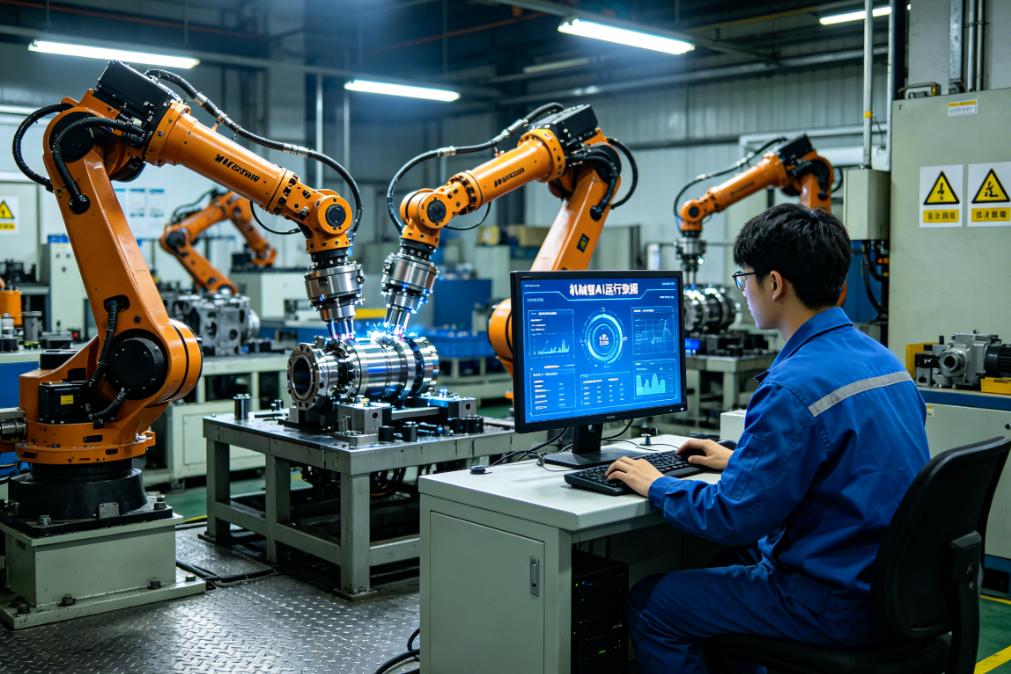
The second direction is Industrial AI Engineer, a currently underestimated employment opportunity. In my experience, small and medium-sized manufacturing enterprises in the Yangtze River Delta region have a greater demand for this role than first-tier internet companies. Yet, many students prefer to compete for low-paying algorithm assistant positions in major cities rather than engage in practical AI projects at these companies.
The third direction is Medical AI Engineer, which has a significant shortage, especially in the fields of medical image analysis and diagnostic assistance. This role typically requires a strong background in medicine or biology.
The fourth direction is AI Large Model Application Development Engineer, a newly emerged field that has exploded in the last two years, with many traditional companies developing their industry-specific large models. This role does not require deep theoretical knowledge of algorithms; proficiency in using existing large model APIs for secondary development is sufficient, making it accessible for ordinary graduates.
High-scoring students should not blindly choose AI majors. Many assume that enrolling in a top university’s AI program guarantees success, but the competition is fierce, and many students end up having to pursue further studies or switch majors.
Internship experience is ten times more important than GPA for AI majors. Graduates without internships, even from prestigious 985 universities, struggle to secure good job offers. Therefore, if a student decides to study AI, they should start looking for internships in their sophomore or junior years, not wait until graduation.
Another point often overlooked is that the regional barriers in the AI industry are much higher than in computer science. Local graduates have a significant advantage in local job markets, as companies prefer hiring employees familiar with the local environment who can work long-term.
If a student plans to develop their career in a specific city, it is advisable to attend a local university, even if its ranking is slightly lower.
Many believe that an AI major only leads to algorithm positions. In fact, besides the four main directions mentioned, there are also development, testing, product, and operations roles, each requiring different skill sets. Students need to plan their studies in advance and focus on relevant knowledge during their university years. For instance, development roles require solid programming skills, while product roles need good communication skills and product thinking.
I have seen students who only study theory for four years and graduate unable to create even a simple webpage. Such students, regardless of their major, will struggle to find good jobs.
Key Takeaways
Do not focus solely on a university’s ranking; consider whether its AI program has corresponding industry collaboration projects. Avoid blindly pursuing popular directions; choose a niche based on the student’s interests and abilities.
Which of these four employment directions do you think is most suitable for children from ordinary families? Is your child suited for studying AI? Feel free to discuss in the comments.
Disclaimer: This article is based on the experiences of a volunteer college application advisor combined with official data, intended for reference only and does not constitute any application advice.
Comments
Discussion is powered by Giscus (GitHub Discussions). Add
repo,repoID,category, andcategoryIDunder[params.comments.giscus]inhugo.tomlusing the values from the Giscus setup tool.