Introduction
As the year comes to a close, competition in AI models intensifies. Zhiyu has launched its new model, GLM-4.7, which has surpassed GPT-5.2 in the WebDev coding arena, claiming the title of top open-source model!
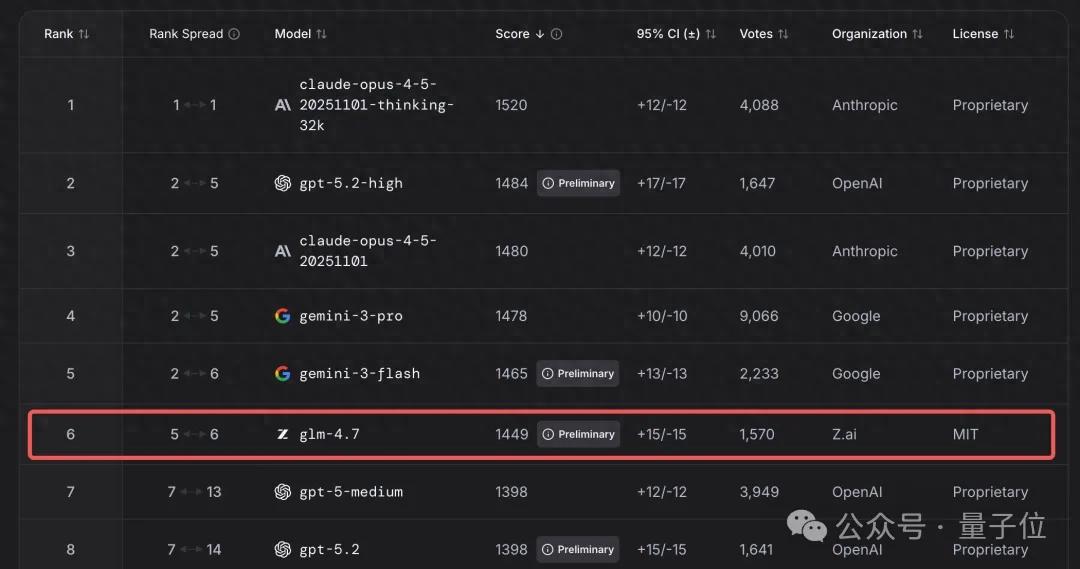
Users are currently testing it extensively, with many expressing their amazement at its performance.
User Experience
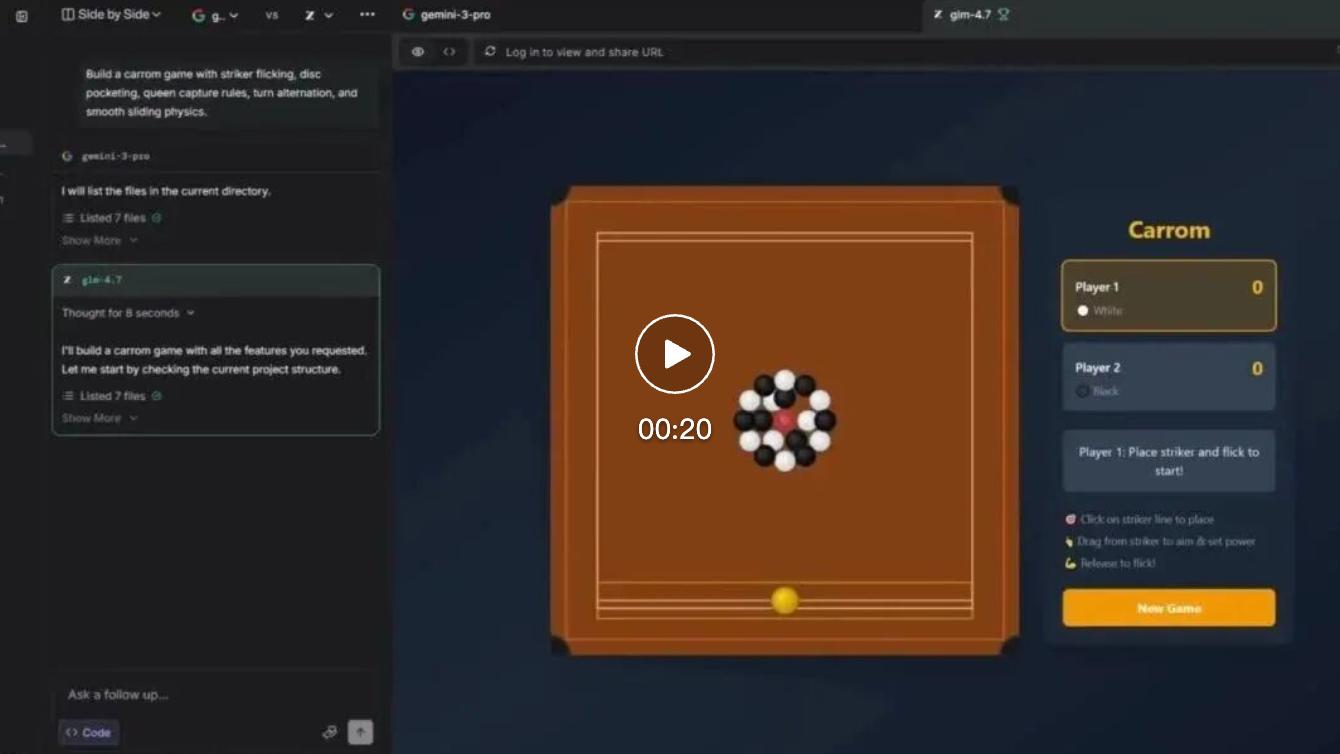
For example, users have compared GLM-4.7 with Gemini 3 while playing a desktop yo-yo game, with many declaring:
GLM-4.7 wins hands down!
Insights from the AMA
Earlier today, Zhiyu hosted an AMA (Ask Me Anything) session on Reddit, clarifying the advancements behind GLM-4.7. The discussion revealed how the model achieved significant performance improvements through post-training and introduced their self-developed reinforcement learning framework, Slime.
Model Performance and Optimization
The most pressing question was why GLM-4.7 shows such noticeable improvements. The Zhiyu team explained that the enhancements primarily occurred during the post-training phase. They utilized a refined Release Recipe during the SFT (Supervised Fine-Tuning) and RL (Reinforcement Learning) stages. By aligning datasets across various fields, the model not only scored higher in benchmark tests but also exhibited significantly improved stability in real-world applications.
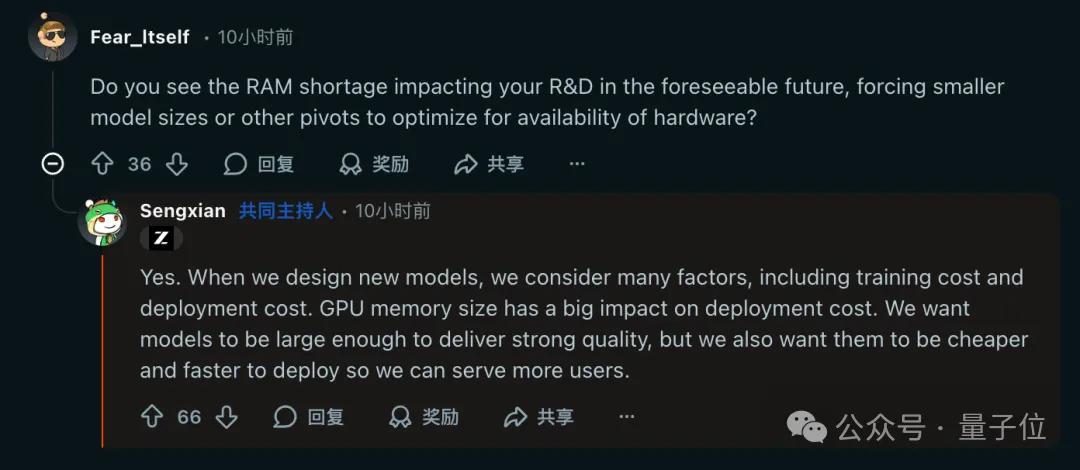
Regarding community inquiries about not releasing larger parameter models, the team stated:
Training and deployment costs are core design anchors.
GLM-4.7 was designed with hardware limitations in mind, aiming to run efficiently on consumer-grade GPUs while maintaining logical capabilities close to 30B or higher. This approach focuses on maximizing performance within limited parameters to ensure practical AI applications.
Additionally, Zhiyu shared their complex pre-training data process:
- Multi-source collection: Includes high-quality papers, novels, and various texts.
- Thorough cleaning: Involves deduplication, quality filtering, and sensitive word screening.
- Alignment strategy: Focuses on SFT and RL stages to make writing styles more human-like and vivid.
Model Applications and Features
While previous versions of GLM were somewhat rigid, version 4.7 has made significant strides in emotional intelligence. Developers frequently asked about programming capabilities during the AMA. The Zhiyu team acknowledged extensive optimizations and adaptations for Claude Code.
Currently, GLM-4.7 excels in multi-language coding, supporting Python and JavaScript, and demonstrating strong comprehension in less common languages and complex logical structures. The team believes the intelligent agent framework contributes up to 30% to performance, leading to deep refinements in system prompts and tool invocation levels.
To enhance human-like responses, the team drew inspiration from numerous novels and scripts. GLM-4.7 now provides richer detail in creative writing, moving beyond clichéd phrases like “on a sunny afternoon.” In role-playing tasks, it maintains character consistency better, reducing immersion-breaking moments.
Moreover, GLM-4.7 introduces a robust feature: Interleaved Thinking.
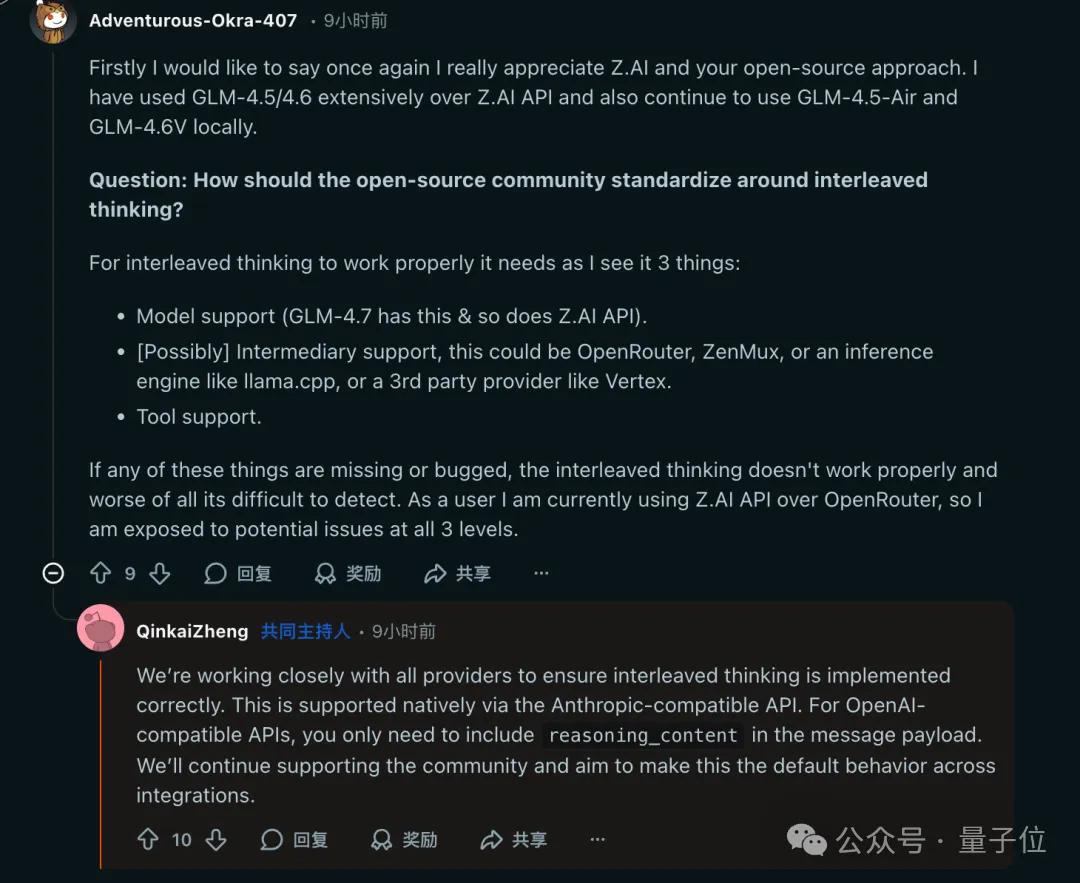
Before executing actions or calling tools, the model engages in a period of implicit thinking. This mechanism, akin to OpenAI’s o1 thinking chain, reduces reckless operations and improves accuracy in handling complex multimodal tasks (e.g., image-based coding and chart analysis).
Technical Methods and Tools
Zhiyu’s popularity in overseas communities is closely tied to its commitment to open-source development. The most exciting revelation from the AMA was the public release of the Slime framework.
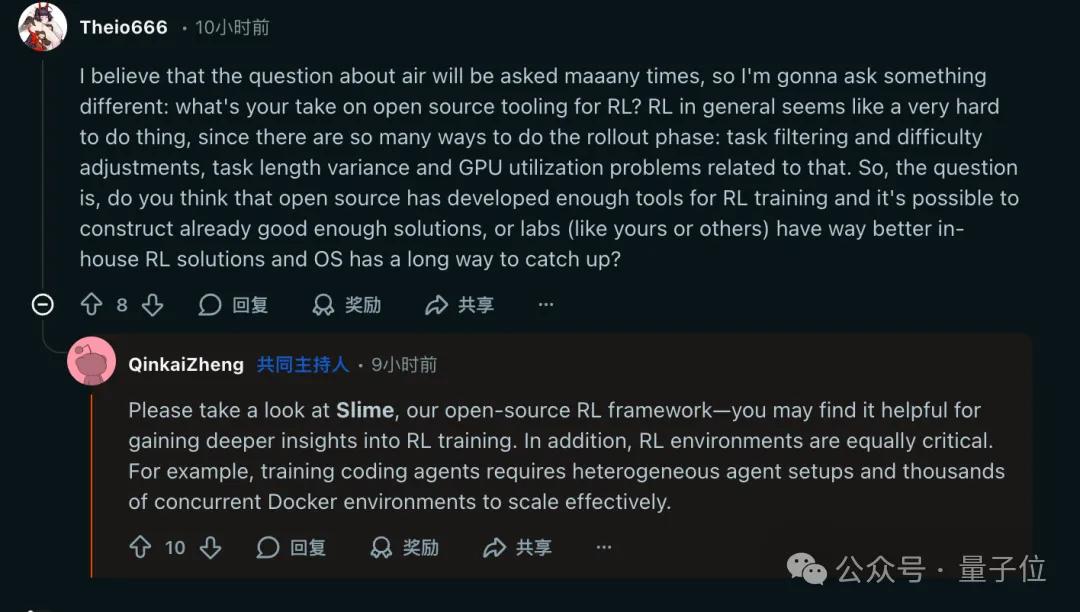
This framework is designed for large-scale reinforcement learning, supporting various alignment algorithms. Its name signifies flexibility and adaptability, helping developers replicate GLM-level alignment effects more easily.
Zhiyu expressed gratitude for the benefits gained from the open-source ecosystem and is eager to give back. They detailed the complete pipeline from data collection and cleaning to quality filtering. Such transparency is rare among domestic large model manufacturers and has earned respect from the LocalLLaMA community.
During the Reddit session, the Zhiyu team showcased their relatable side. When asked about unexpected challenges during training, they replied:
The biggest challenge was actually the release recipe. Like a chef with the best ingredients (data), mastering the timing (RL parameters) to achieve perfection often requires countless iterations.
Testing GLM-4.7
After understanding the intricate workings behind GLM-4.7, we proceeded with practical tests. Notably, when developing on z.ai, it’s best to click on the “Full-Stack Development” button:

We started with a simple Plants vs. Zombies game prompt:
Please prepare a game of “Plants vs. Zombies” using the materials in the current directory (download https://z-cdn.chatglm.cn/temp/Grazy%20Dave.mp3 as game music, download https://z-cdn.chatglm.cn/temp/pvc-images.zip for various plant and zombie images, Pea.png/PeaSnow.png bean materials, Shop.png/Card.png interface materials, and Sun.gif).
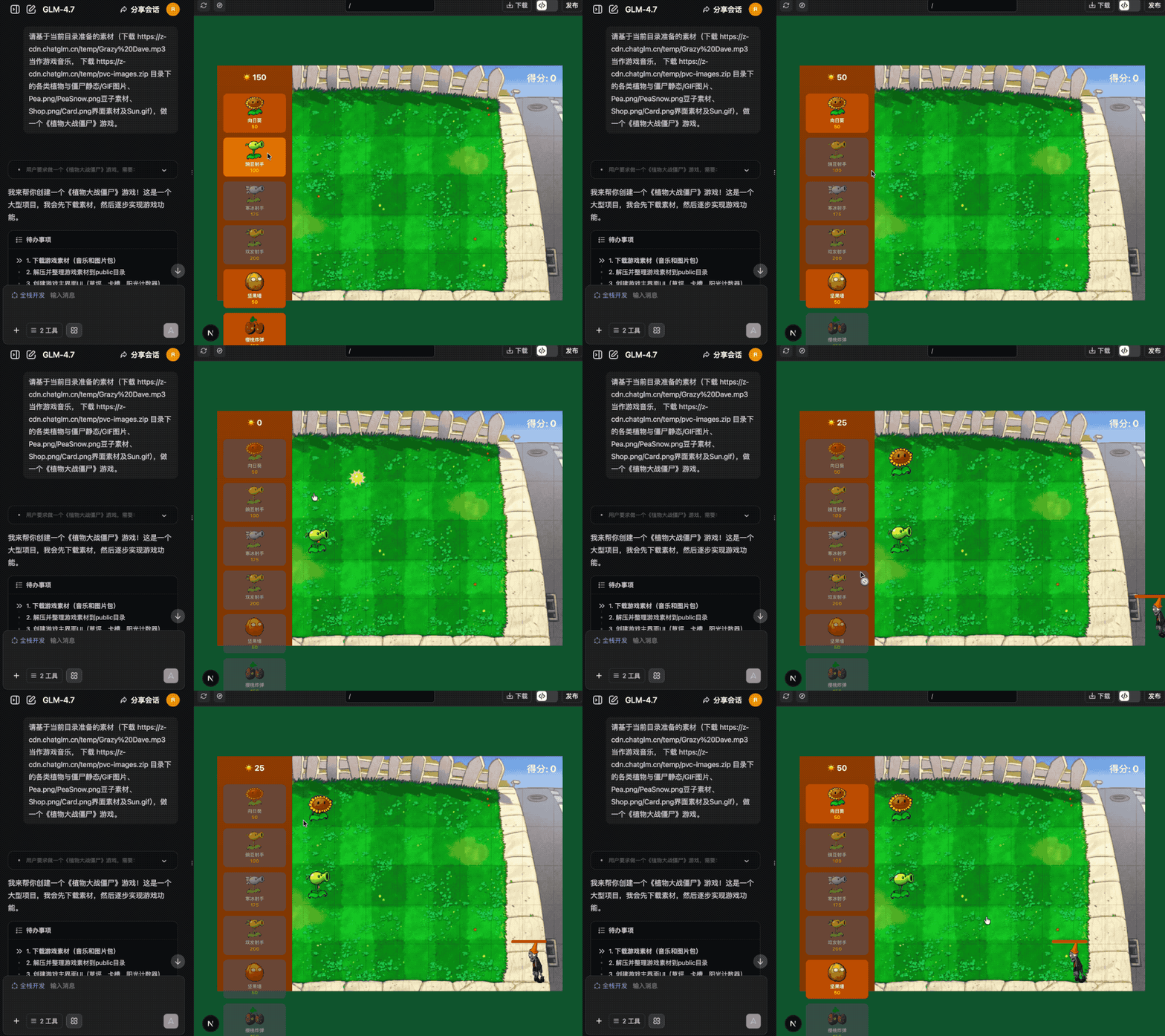
The results were visually and audibly impressive, showcasing a rich experience (link to the demo below):
https://chat.z.ai/c/5415b1d8-ac01-4bc6-a24a-8e815c8fa361
In addition to games, another significant leap in GLM-4.7 is its ability to create PPT presentations. The prompt for this demo was straightforward:
Create a PPT introducing Paris.
The PPT’s quality reached a level suitable for commercial use:

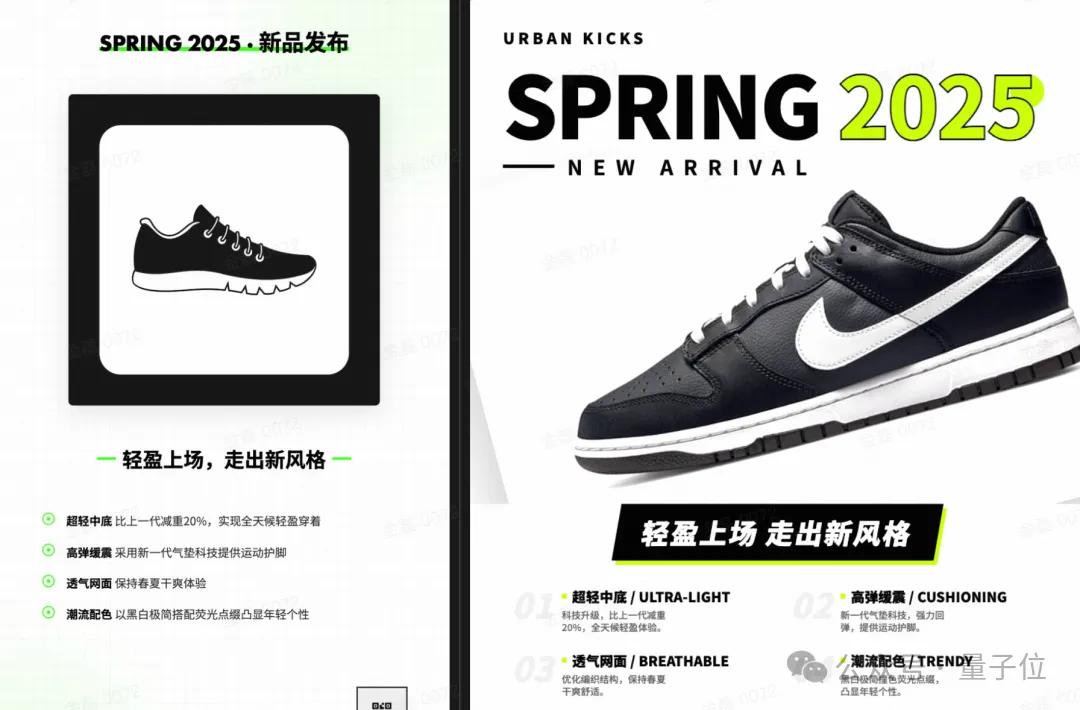
Furthermore, poster design is another standout feature of GLM-4.7. For example, when designing a promotional poster for sneakers, the difference between GLM-4.6 and GLM-4.7 is evident:
Given these impressive results, it’s no wonder GLM-4.7 has been trending on social media.
Commitment to Continuous Open Source
During the AMA, aside from technical details, attendees were eager to know about Zhiyu’s plans for an IPO, especially with recent news about their potential listing in Hong Kong.
A seasoned user on Reddit asked:
Once the company goes public, will you reduce your open-source contributions?

The Zhiyu team provided a reassuring response:
Open-source is our core DNA. Regardless of capital paths, we commit to continuous open-source contributions post-IPO.
The team explained that they recognize their growth is deeply intertwined with the nurturing of the open-source ecosystem. Continuous open-sourcing is not just a way to give back but also the best path to maintain technological leadership and establish developer standards. This commitment has garnered respect from many overseas developers.
By enhancing cognitive limits through interleaved thinking and standardizing training processes with the Slime framework, Zhiyu is proving that domestic models can not only achieve high scores but also excel in practical applications.
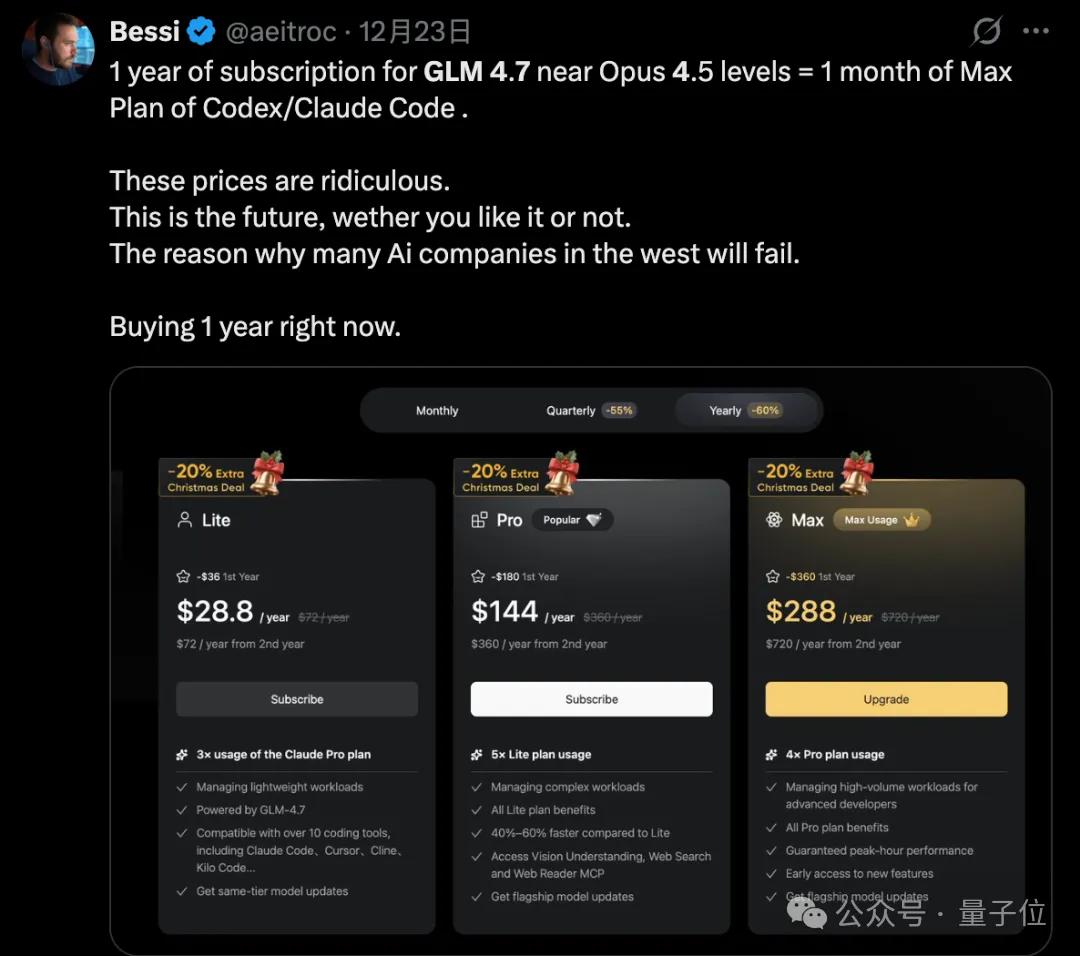
User feedback indicates that GLM-4.7 and Zhiyu’s long-standing efforts have been highly recognized. For instance, one user noted:
A one-year subscription to GLM 4.7 (comparable to Opus 4.5) = one month of Max Plan for Codex/Claude Code.
I would subscribe for a year immediately.
Even Fireworks, valued at $4 billion, supported GLM 4.7 on Day 0, indicating that Americans are also considering better model options.

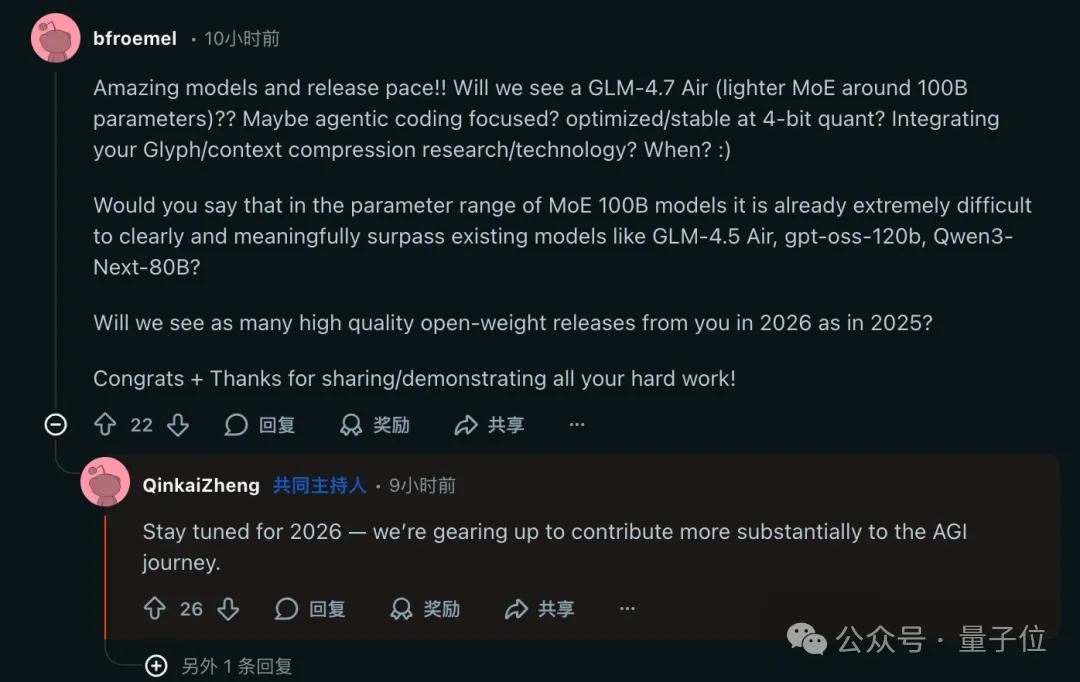
Additionally, during the AMA, Zhiyu’s chief scientist, Tang Jie, shared his views on the development of large models at the launch of GLM-4.7.
Before the IPO lights shine, Zhiyu chooses to illuminate the screens of developers first. This long-term romanticism may be the most precious backdrop in the era of large models.
Comments
Discussion is powered by Giscus (GitHub Discussions). Add
repo,repoID,category, andcategoryIDunder[params.comments.giscus]inhugo.tomlusing the values from the Giscus setup tool.